
Wisdom and the Arts
A Ministry of Artistic Creation Guided by the Spirit
This year, we will be featuring how Wisdom is visible through the arts by showcasing the sisters’ creations. In the form of poems, crafts, photography, painting, cooking, and more, we’ll be sharing visual representations of how Wisdom has influenced their lives. Keep an eye out here and on our socials for updates and inspiring artwork in its many forms!
March 2026
“For we are his workmanship, created in Christ Jesus for good works, which God prepared beforehand, that we should walk in them.”
–Ephesians 2:10
Sr. Grace Malonzo’s Crochet & Needlepoint Art
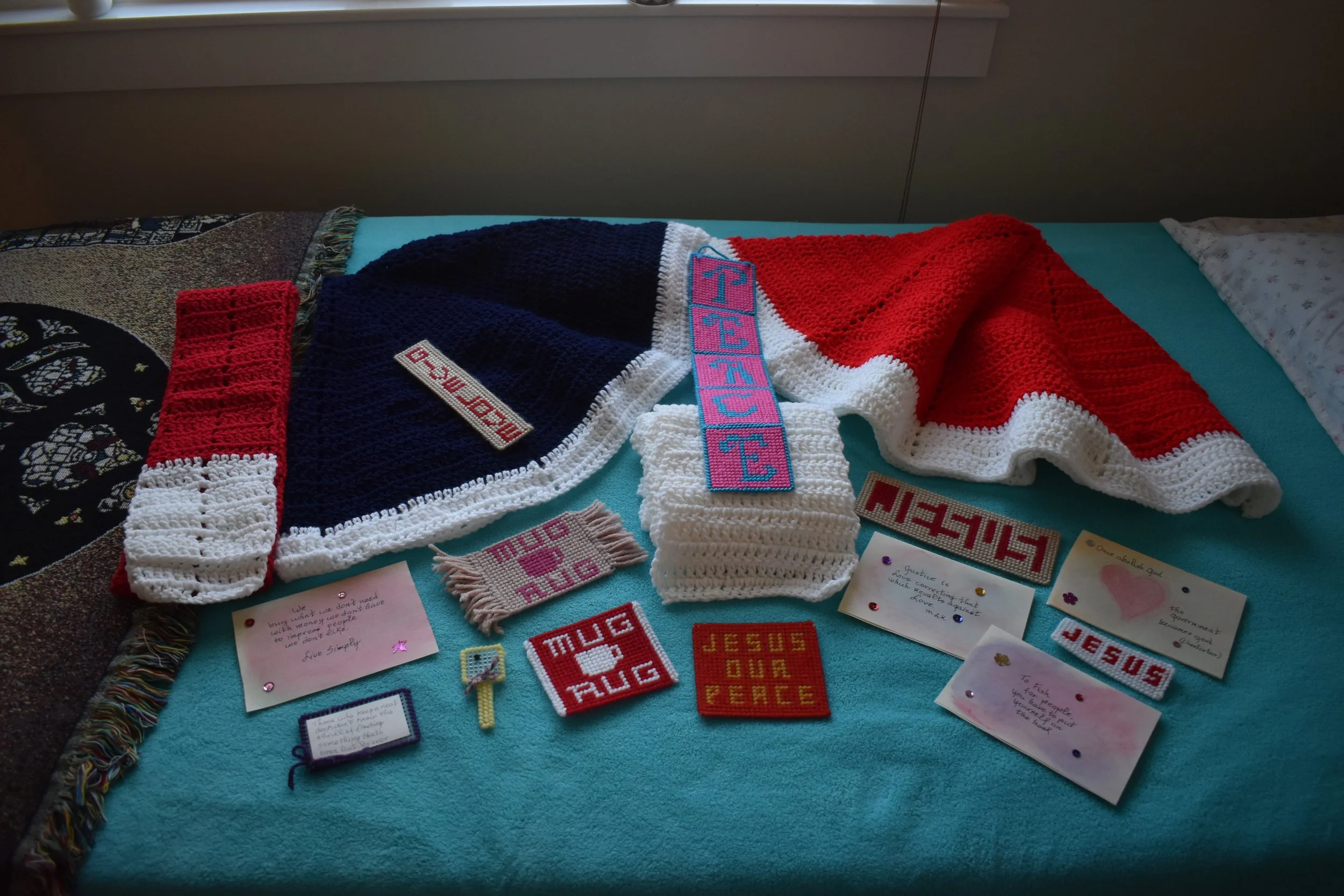
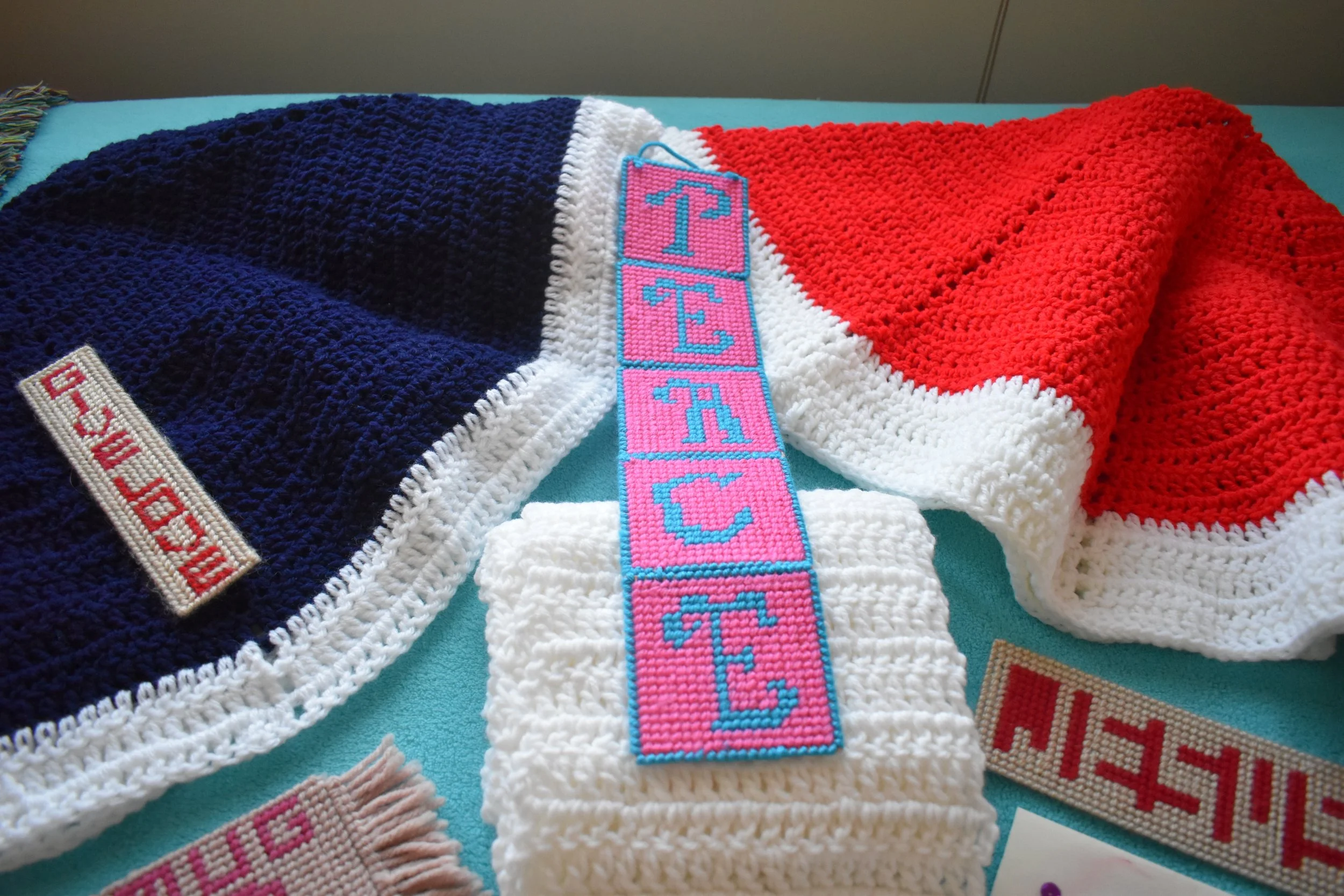
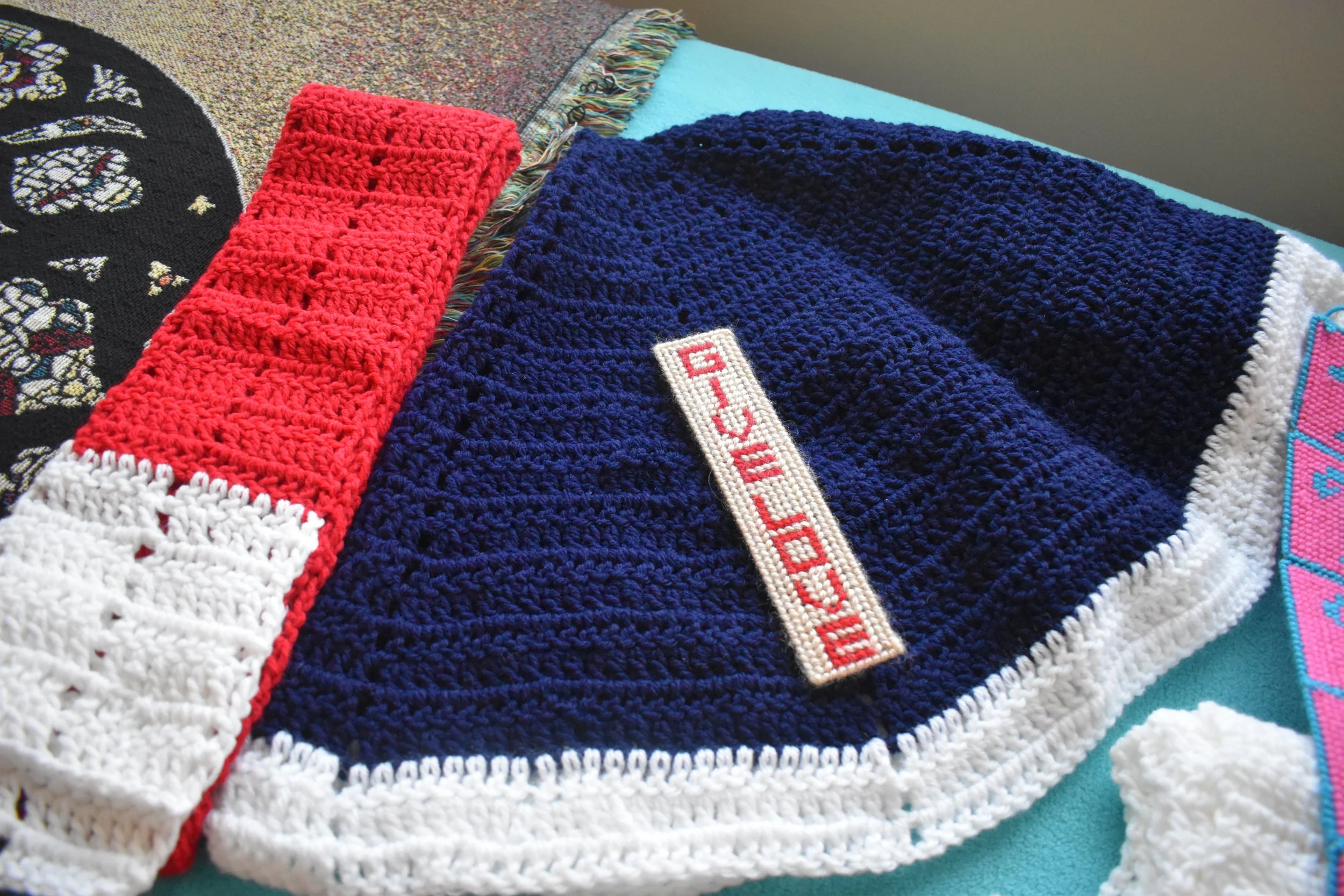
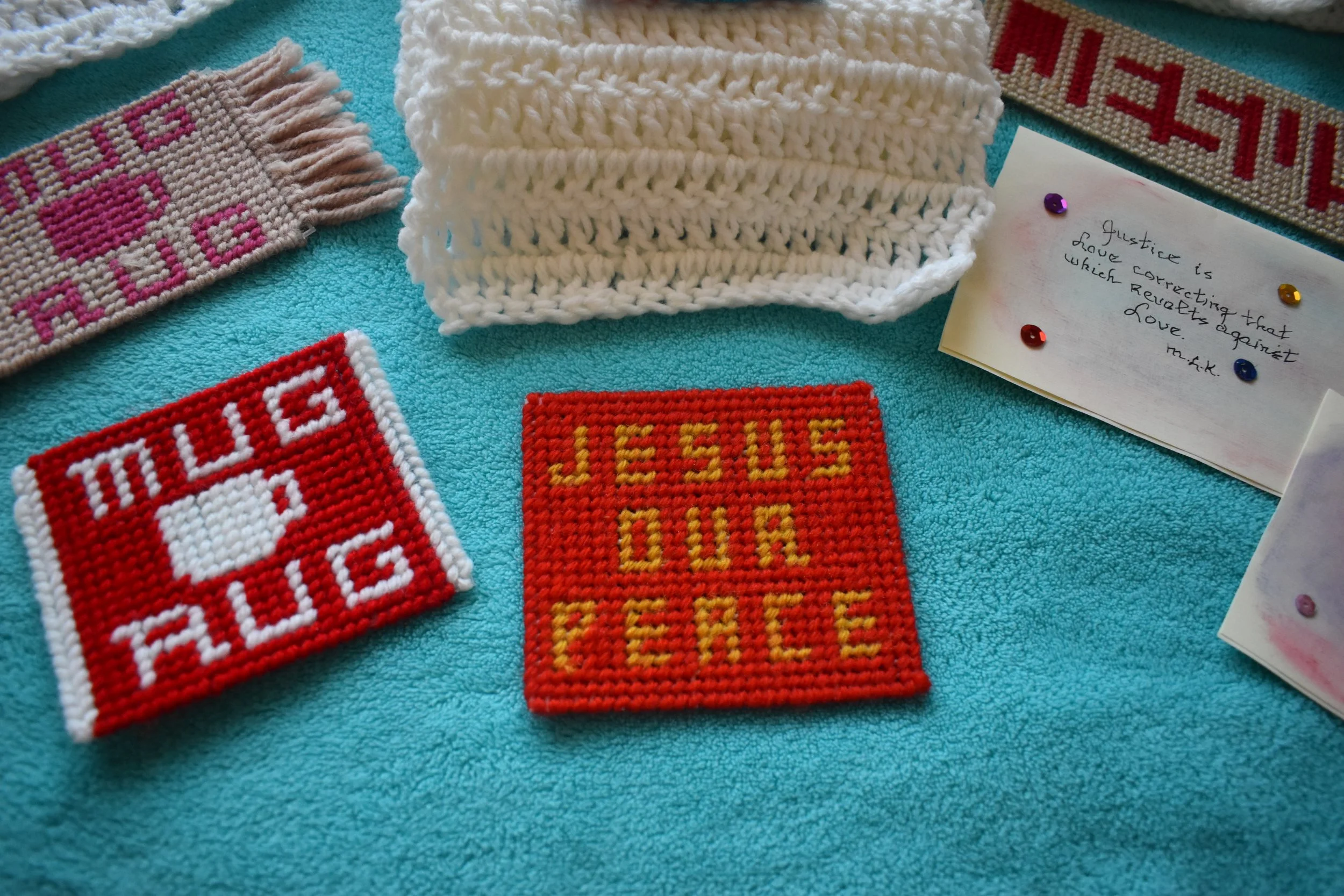
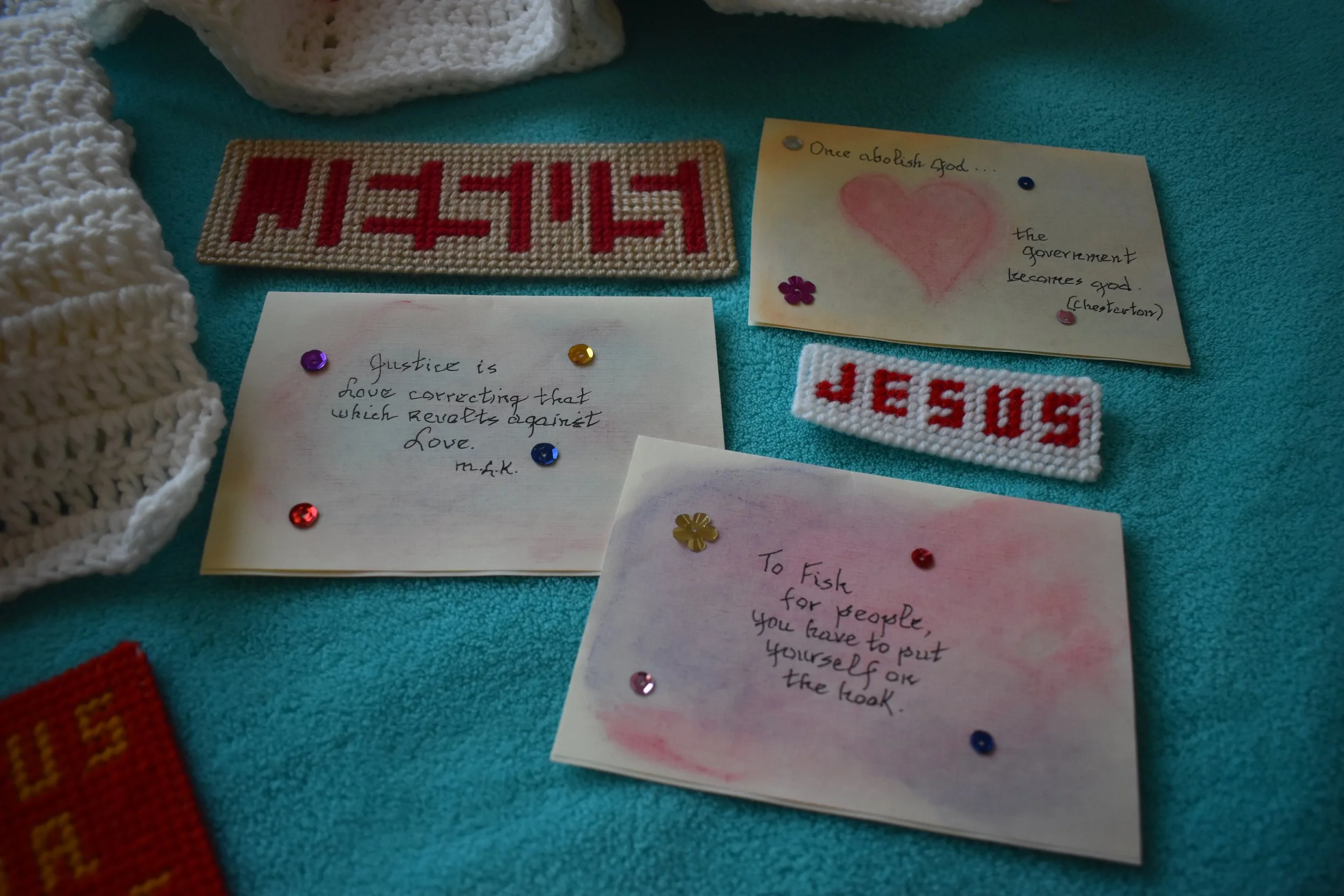
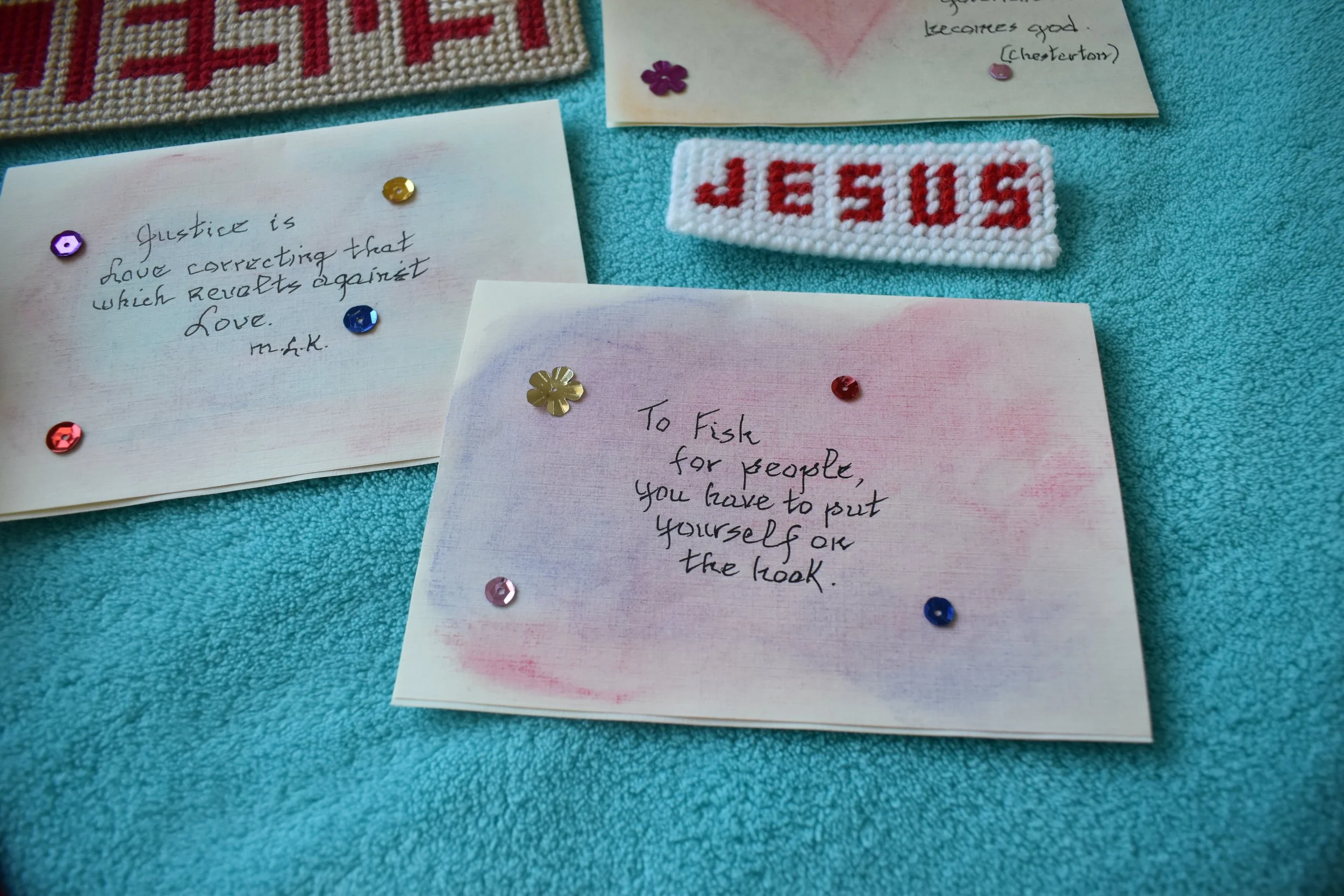
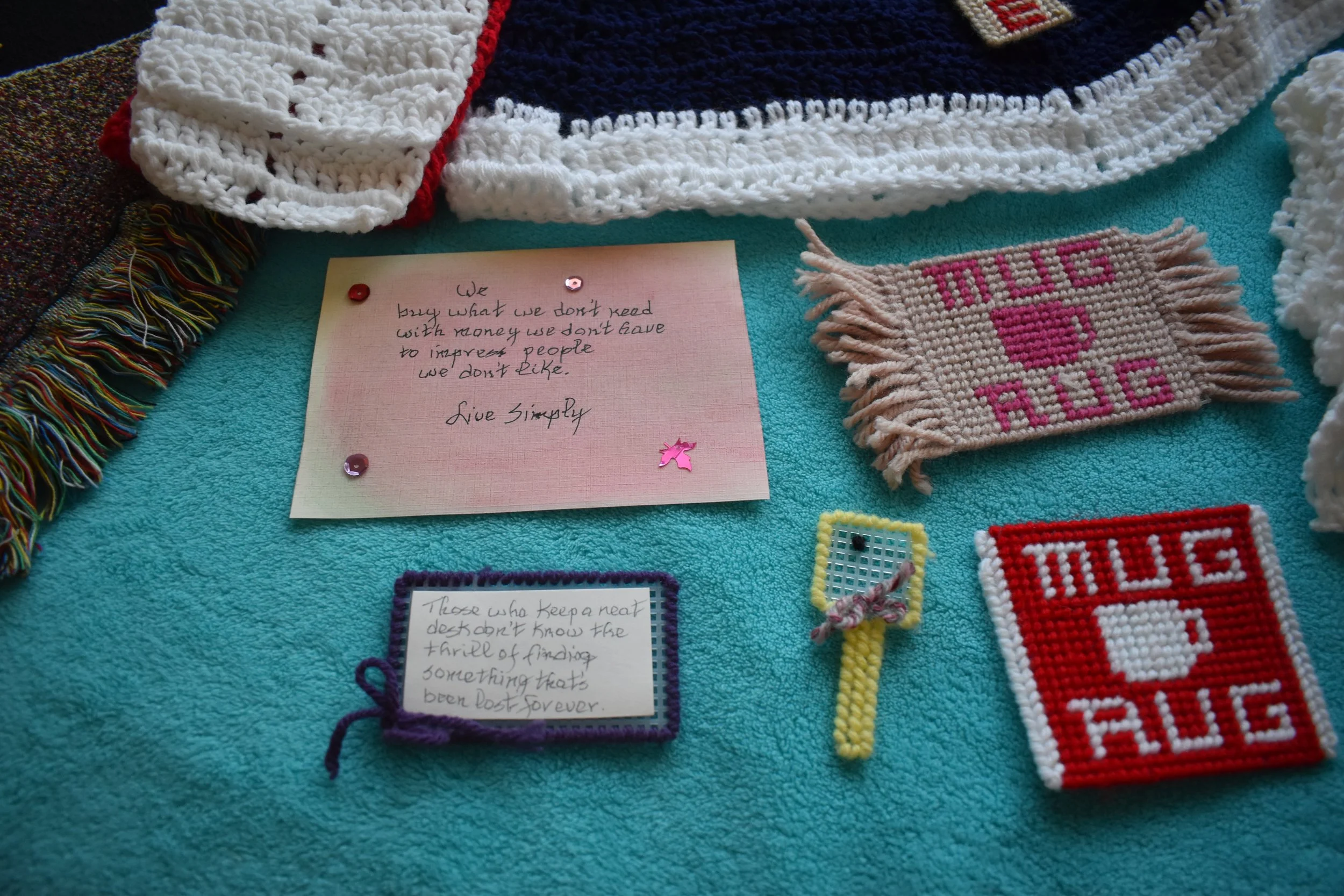
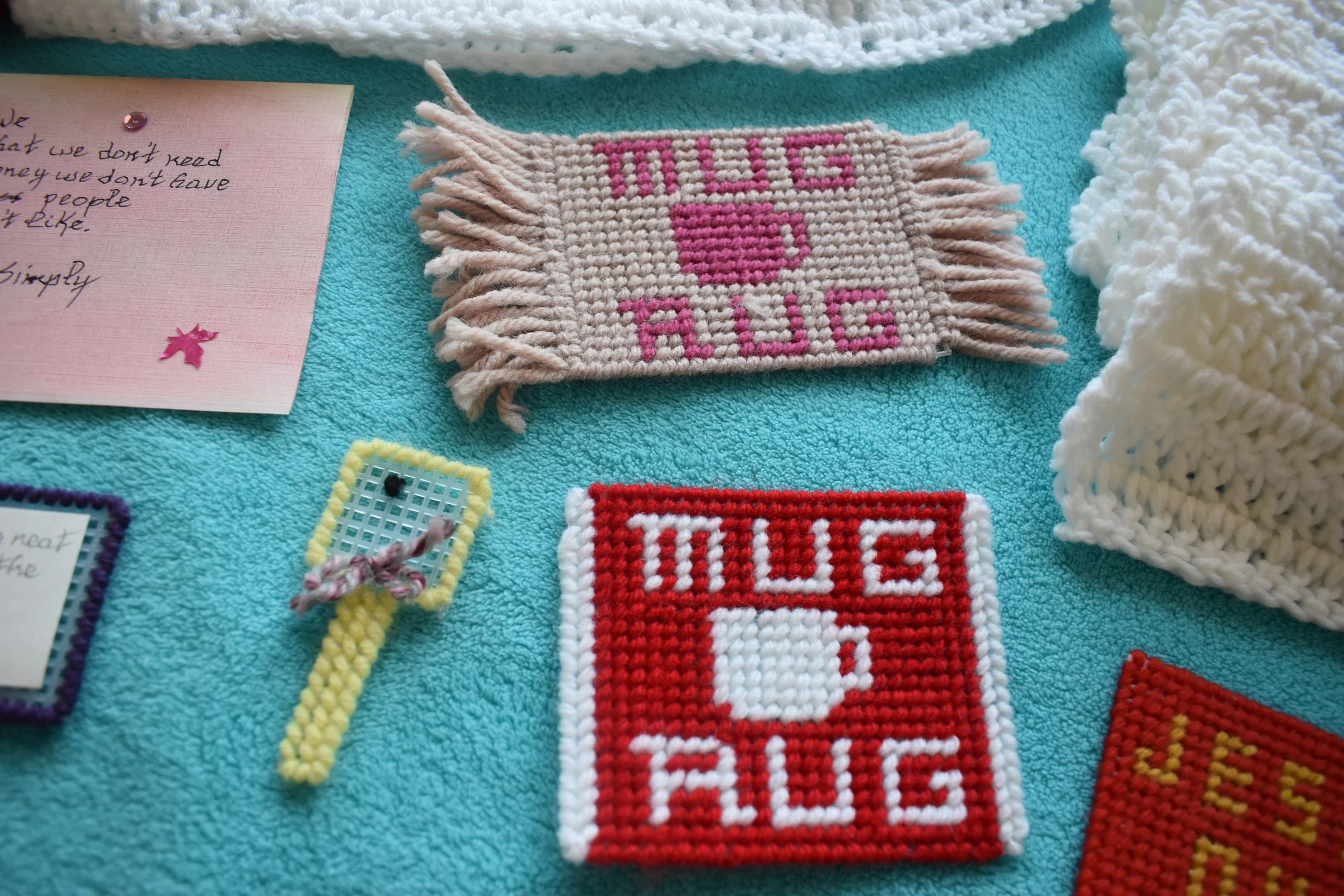
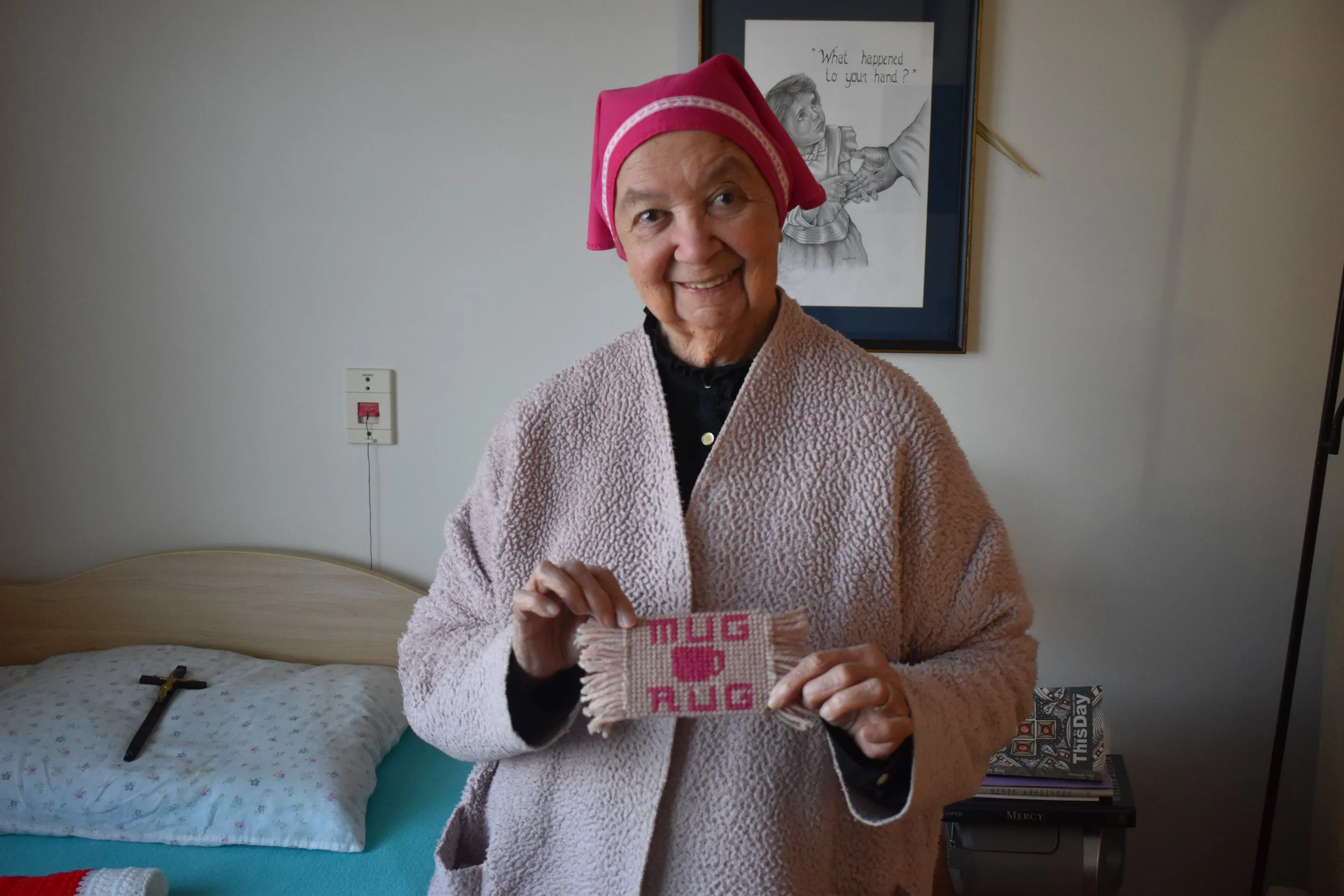
Sr. Grace Malonzo grew up in Portsmouth, Virginia, where she originally learned how to crochet.
“My mother taught me how to crochet,” said Sr. Grace. “She tried to teach me how to do the reading. It was like Chinese, I could never read. So I can't do anything by pattern. I just learned.”
In her room, Sr. Grace has photos of her mother, brother, and father, who was in the Navy for 32 years.
While she was still in the South, she joined a sewing group with other sisters at church, where she learned how to make prayer shawls.
Her crocheted items include prayer shawls and scarves, along with needlepoint pieces like mug rugs and decorated letters.
“When I have time, [I] just sit and do it,” she said. “It’s a good pastime.”
She mostly single or double crochets instead of knitting, and gives pieces away as gifts for different occasions.
“I'm very close to the men of St. Joseph, it's a prayer group down South that I left,” she said. And I'd like to send all of them one of [the Jesus needlepoints] for Christmas.”
While she began crocheting earlier, she started doing needlepoint after entering the convent in 1953.
Some of the scarves and shawls that Sr. Grace makes are given to homeless people in New York City by one of the nurses at Our Lady of Perpetual Help, Donna.
“She says to the sisters, 'Give me anything you want, and I'll give it to them.’ And she takes a picture and has a name and then shows them to us. Really lovely,” Sr. Grace said about Donna.
“So that's what mainly the shawls are made for.”
Sr. Grace also creates by writing letters to her friends.
“I write to people. I like to keep it going and communication going,” she said.
The cards showcased in the Wisdom and the Arts photos are decorated with pastels and tiny sequins. The sequins were recycled from previous cards.
“It's so pretty and shiny. So I just used them on the cards.”
The card itself is just a piece of paper folded in half and then put into an envelope to send off.
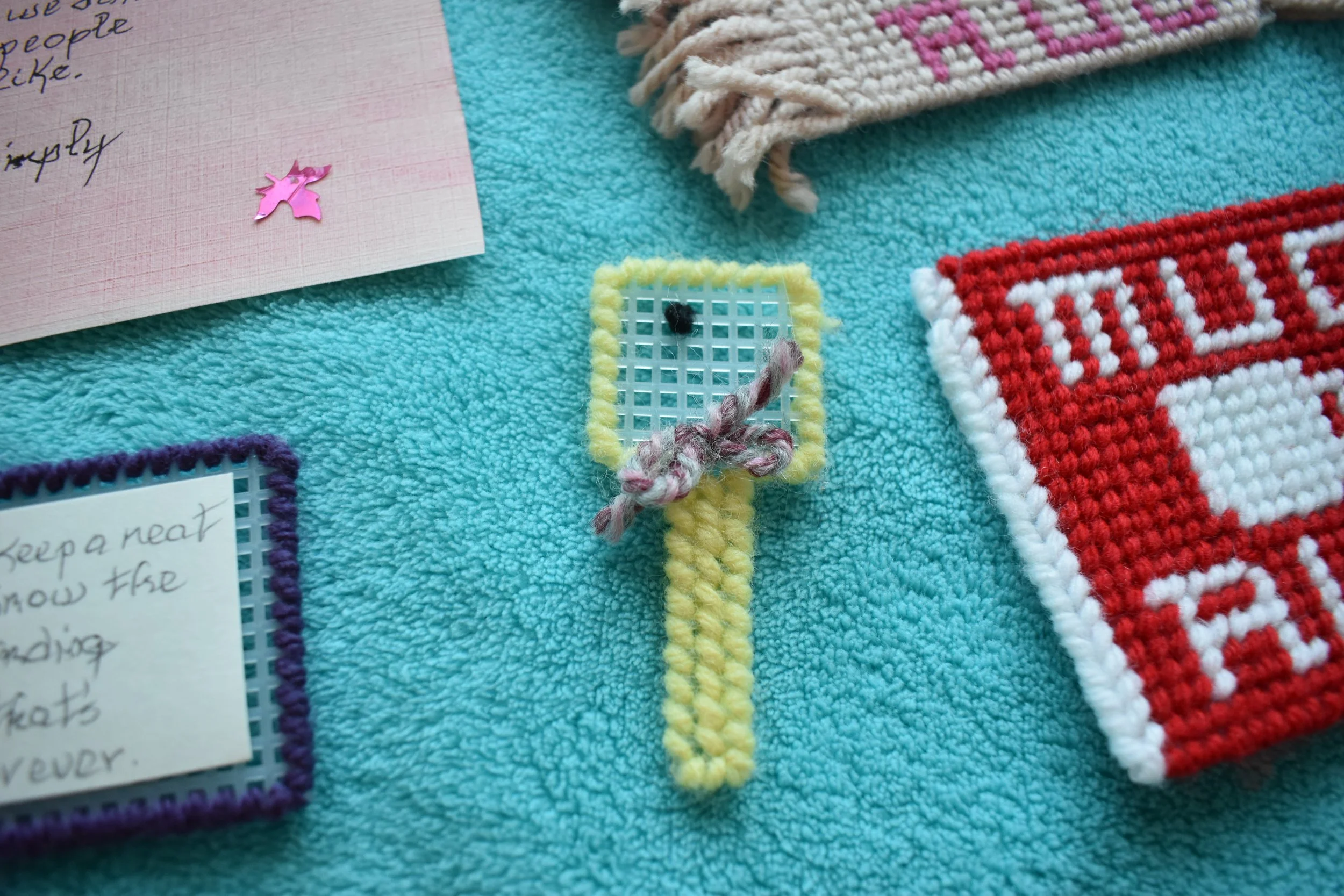
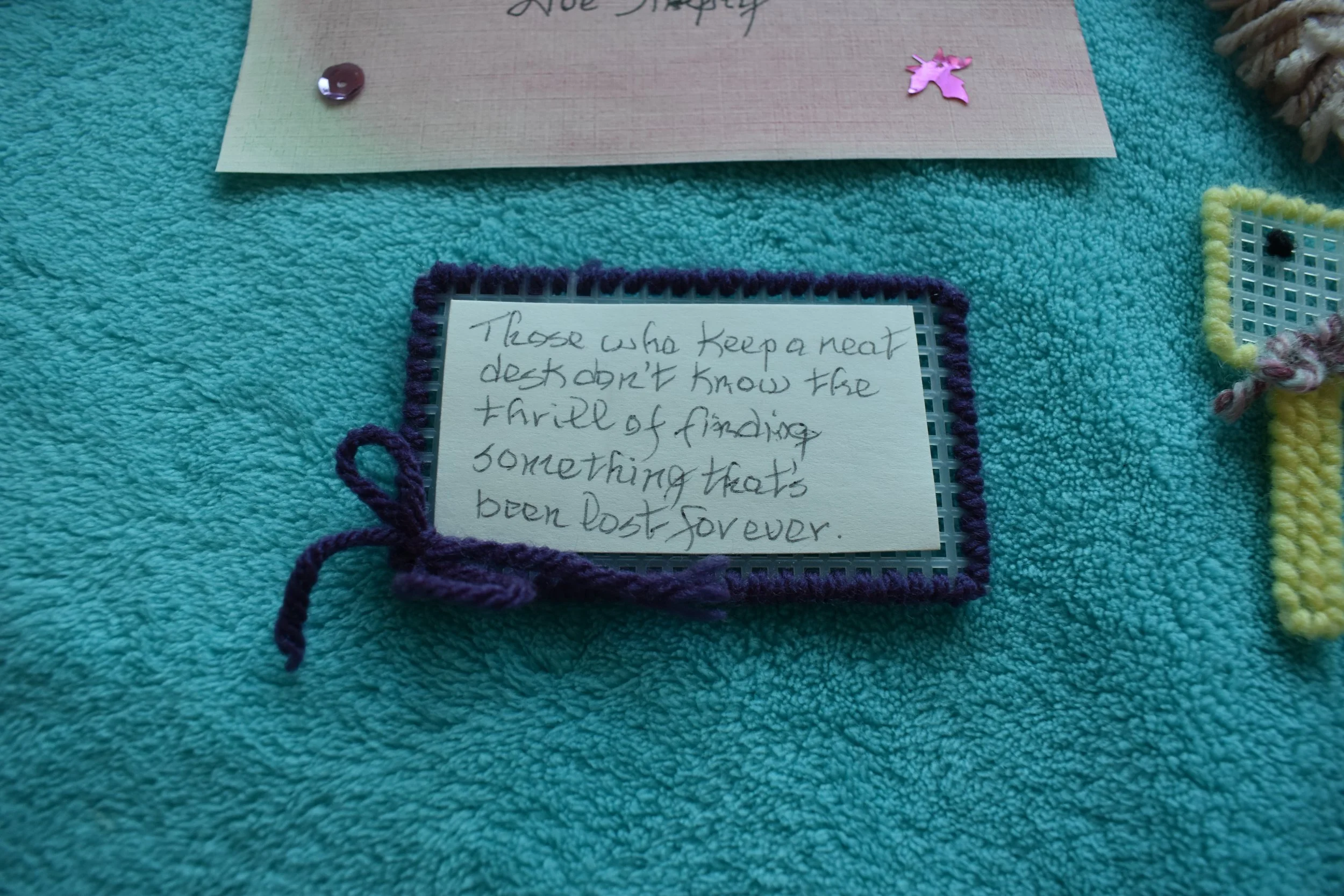
She also made a needlepoint flyswatter featuring a tiny yarn fly that can be hung on the fridge. Another needlepoint work featured, “Those who keep a neat desk don't know the thrill of finding something that's been lost forever.”
The needlepoint art can also go in the washer.
Crocheting and writing letters aren’t Sr. Grace’s only passions, though. She earned an RN degree from Maryview School of Nursing in Portsmouth and worked as a nurse for many years.
She also worked in Malawi and had a photo of a baby she helped while there in her room.
“We transfused that baby's mother's blood. Because the baby had anionic incapillability. We saved that baby.”
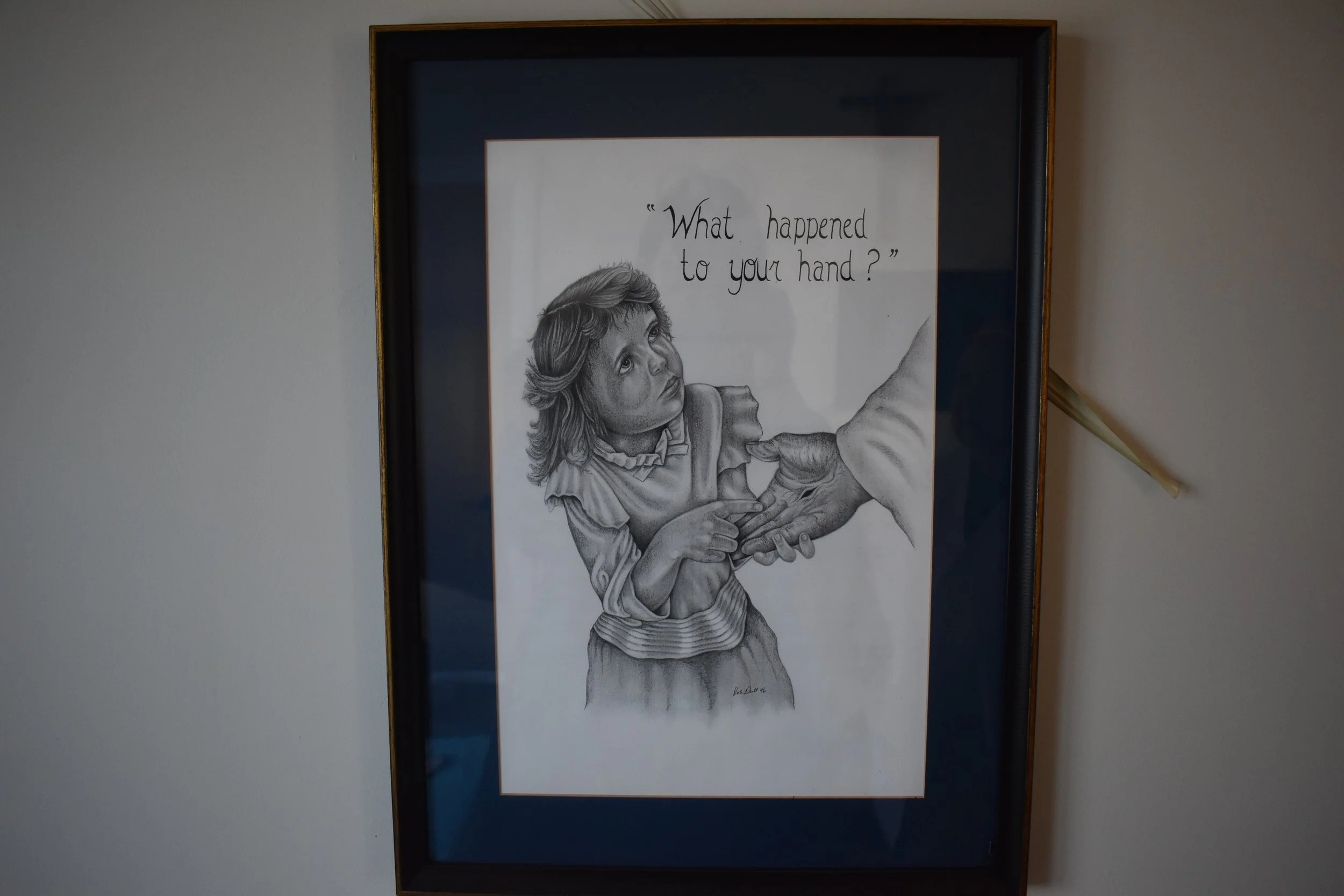
Another piece she had in her room was a drawing by her friend, Ron, whom she met while in the prison ministry. While Ron was in prison, he decided to give drawing a go for the first time.
“He was in prison. And he said, ‘When I was there, I saw another fellow draw,’” shared Sr. Grace. “And he said, ‘I think I can do it.’ He never drew, never, never, never.”
The framed drawing of the girl asking, “What happened to your hand?” was done by Sr. Grace’s friend, Ron.
Sr. Jackie Ayotte’s Prayer Shawls
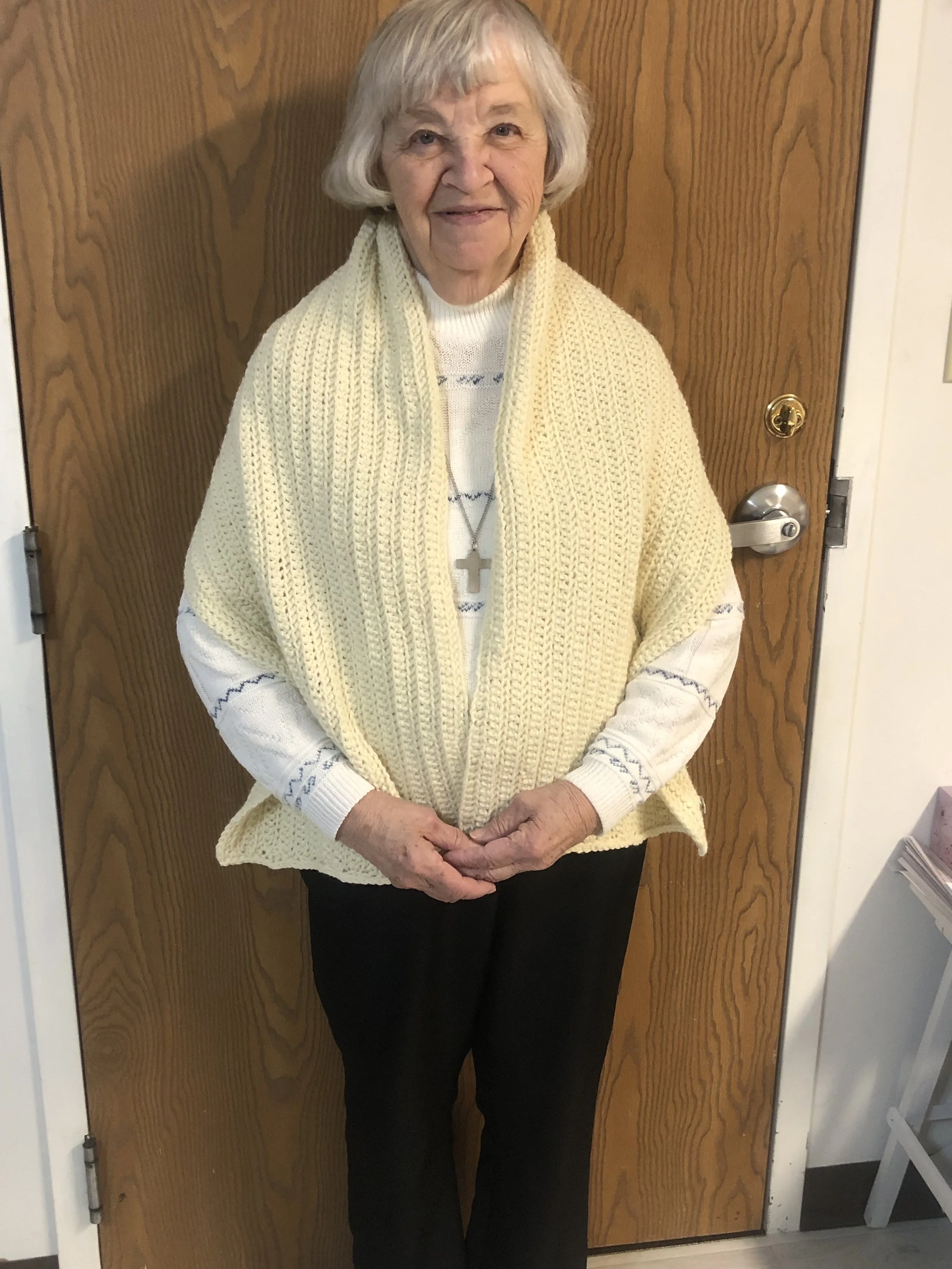
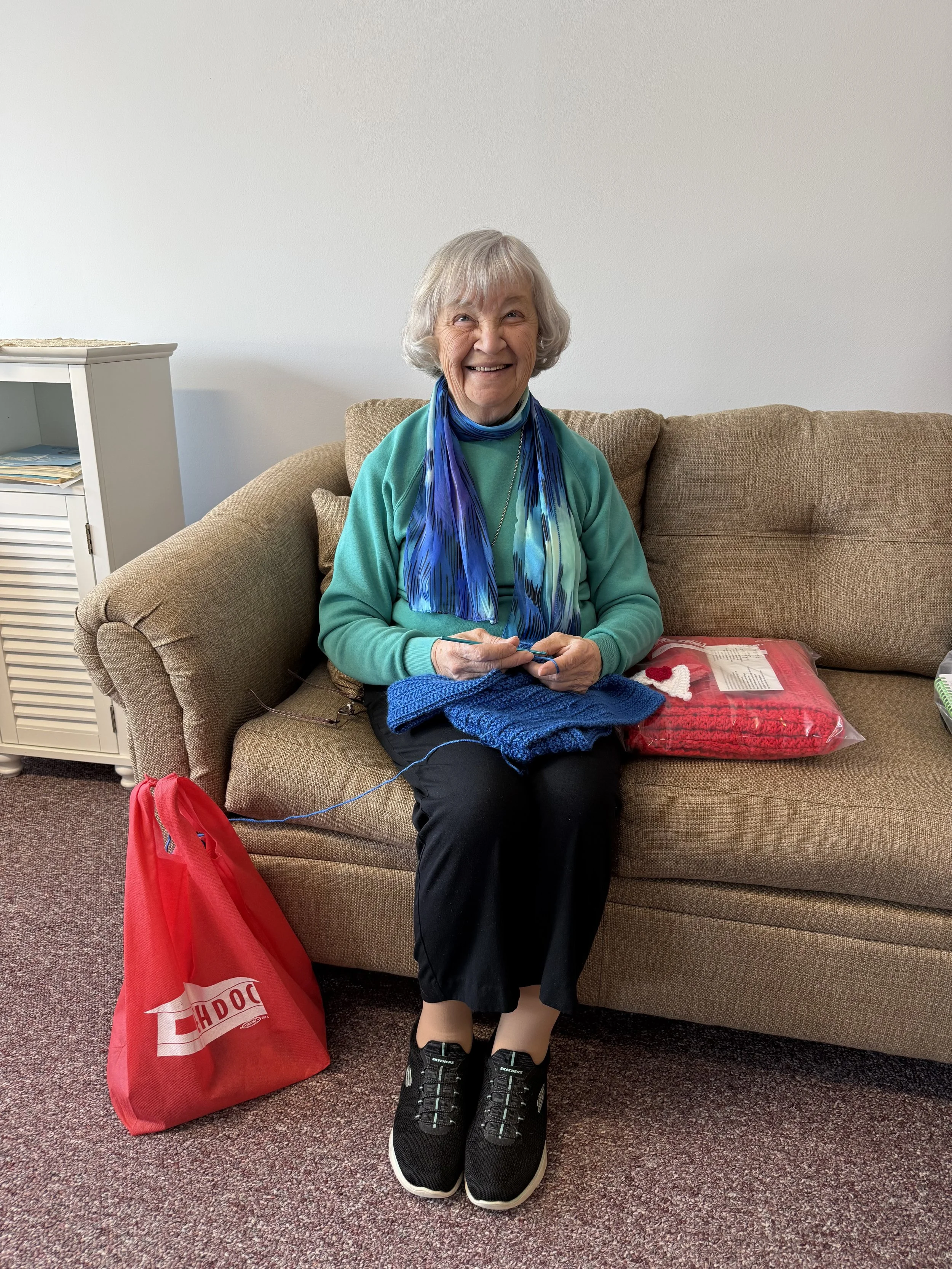
The Prayer Shawl Ministry, founded in 1998 by Janet Bristow and Victoria Galo after their experience at the Hartford Seminary in Connecticut, blends the care and love of knitting and crocheting with a spiritual mission to comfort those in need. Each handmade shawl is crafted with prayers and intentions for the recipient, spreading blessings and solace. The act of giving and receiving these shawls often inspires recipients to create and share their own, extending the ripple of kindness and support.
After she herself suffered an illness and found comfort through a prayer shawl that she received from a friend in New York, Louise Barrasi of Fort Kent, Maine, established a ministry through the Christian Life Center in Frenchville, Maine. The goal was to provide hand-knit and crocheted shawls to community members facing serious illness, to nursing home residents, and to other community members in need of healing and prayer.
Last Summer, the ministry found a new home at the Long Lake Public Library in St. Agatha, Maine, when Sr. Jackie Ayotte, DW, was contacted about space to host the already established group. She said, “Having learned to crochet and knit as a child, I was able to do it when I needed to. Last October, I decided to join this group, and I am enjoying it. I am now crocheting my 6th shawl. It allows us to reach out to people at a vulnerable time in their lives. It lets them know that they are seen by people who care. I have been very concerned about the invisible people within our parishes. This is another positive way of reaching out to them where they are.”
Over 100 shawls have been donated to those in need throughout the community. With each shawl, a special poetic blessing is attached and is often signed by the creator and a priest. The poem expresses the deep care, love, and spiritual intention woven into the making of a prayer shawl. Beginning and ending with prayer, each shawl is crafted to bring comfort, healing, and a sense of being loved to its recipient. The poem highlights the prayers and blessings embedded in every stitch, aiming to provide warmth, reassurance, and a reminder that the recipient is cared for—both by the maker and by the Lord.
February 2026
“I live with attention, obtaining knowledge and foresight.”
–Proverbs 8:12
Sr. Rosemary Connelly’s Eyeglass Cases
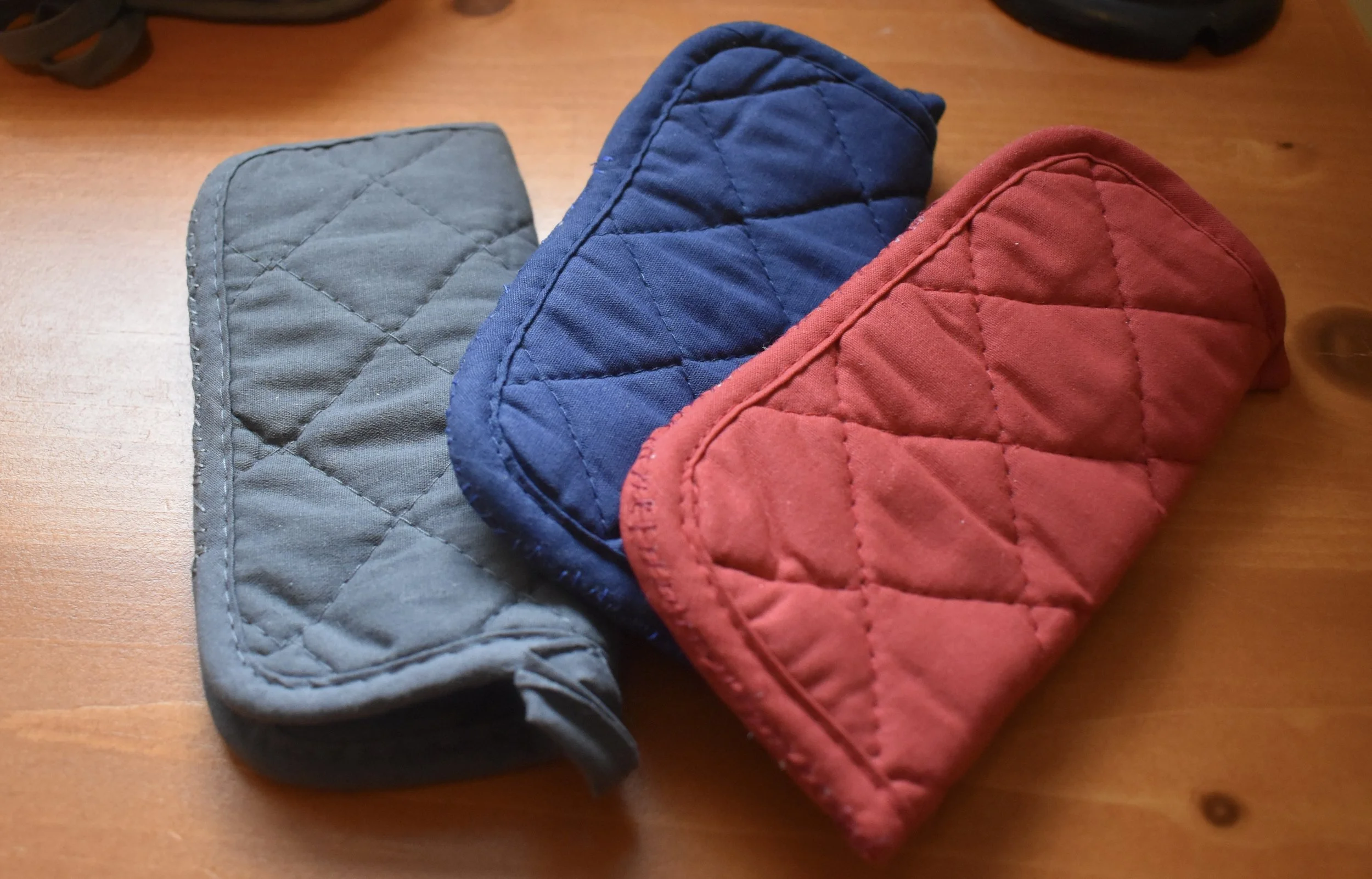
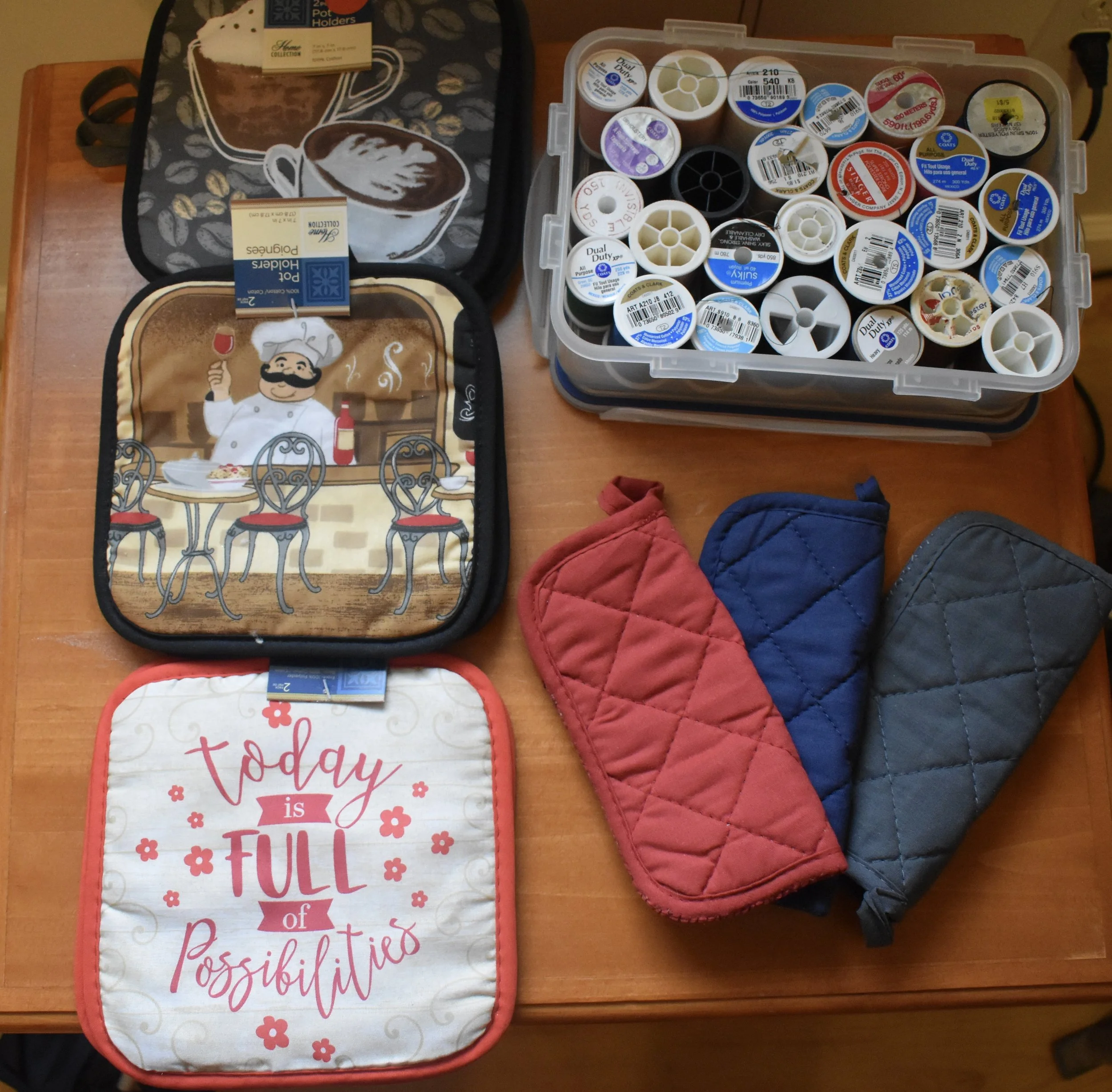

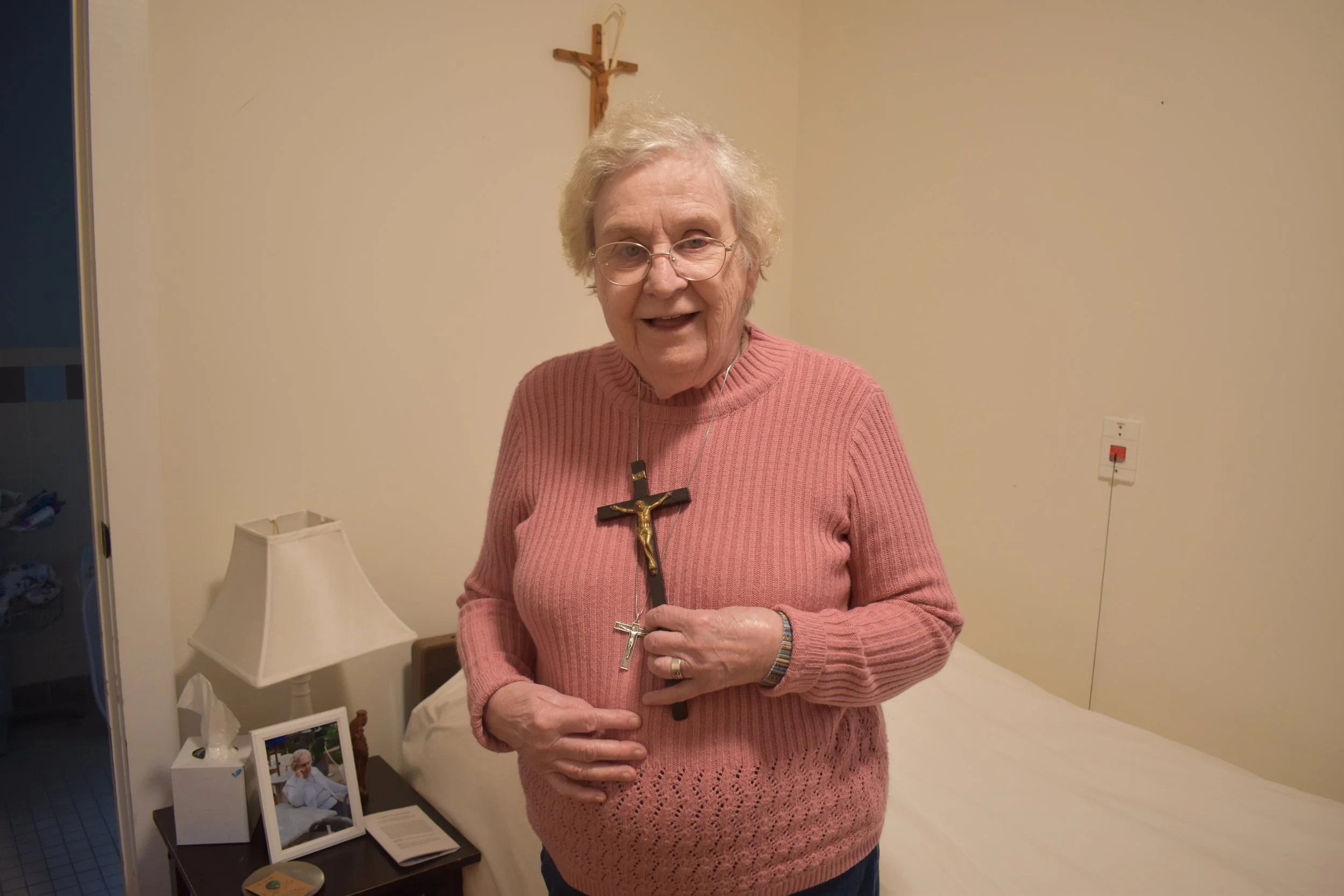
Sr. Rosemary Connelly began sewing when she entered the Daughters of Wisdom. She was sent to work at Maryhaven, a center for those living with special needs (then known as the Wharton Memorial Institute), to sew after she made profession.
“It was for boys and girls. And I was sent there to sew. My mother nearly flipped,” said Sr. Rosemary. “I never sewed at home. Never.”
Even though she hadn’t sewn when she was younger, it became an outlet for creation.
“I guess maybe I enjoyed creating. I think there was a creation in that. I was putting something together that I was going to wear,” said Sr. Rosemary.
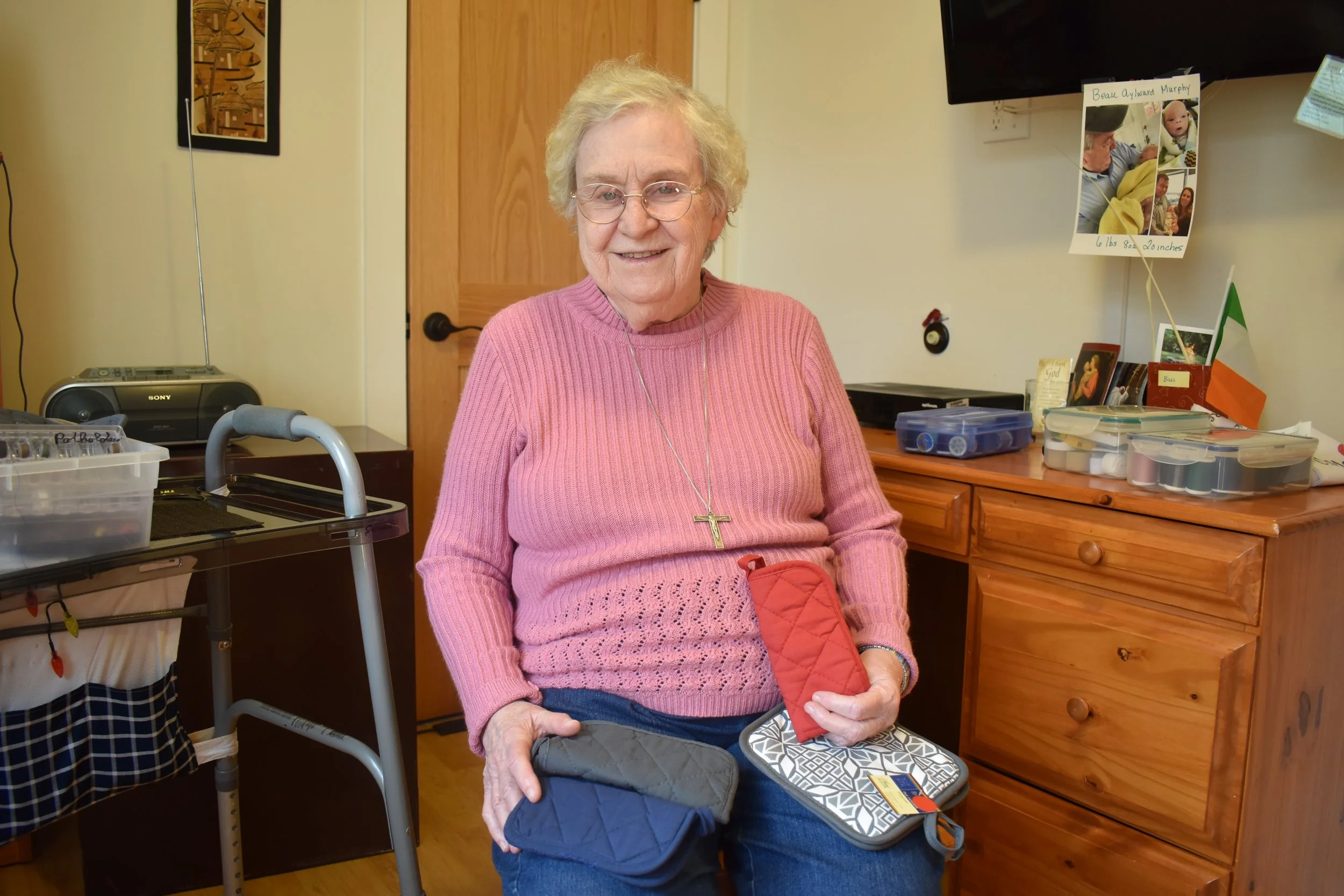
Later, she began creating reading-glass cases from cloth potholders. The potholders are folded and sewn up the sides, making it easy to slip a pair of glasses in and out.
“I can't remember where I saw it. But I just looked at it and said, gee, that's easy to make. There's no reason why it can't be done easily with a potholder because the potholder itself is already made.”
They were a hit with the sisters in Litchfield, Connecticut.
“[A Sister] was visiting us in Litchfield, and I had just finished making one of these, and she said, ‘What is that, Rosemary?’
And I said, ‘That's for reading glasses.’
And she says, ‘Oh, I like that.’
I said, ‘Okay, you can have it.’ And I gave her one. She's still using it.”
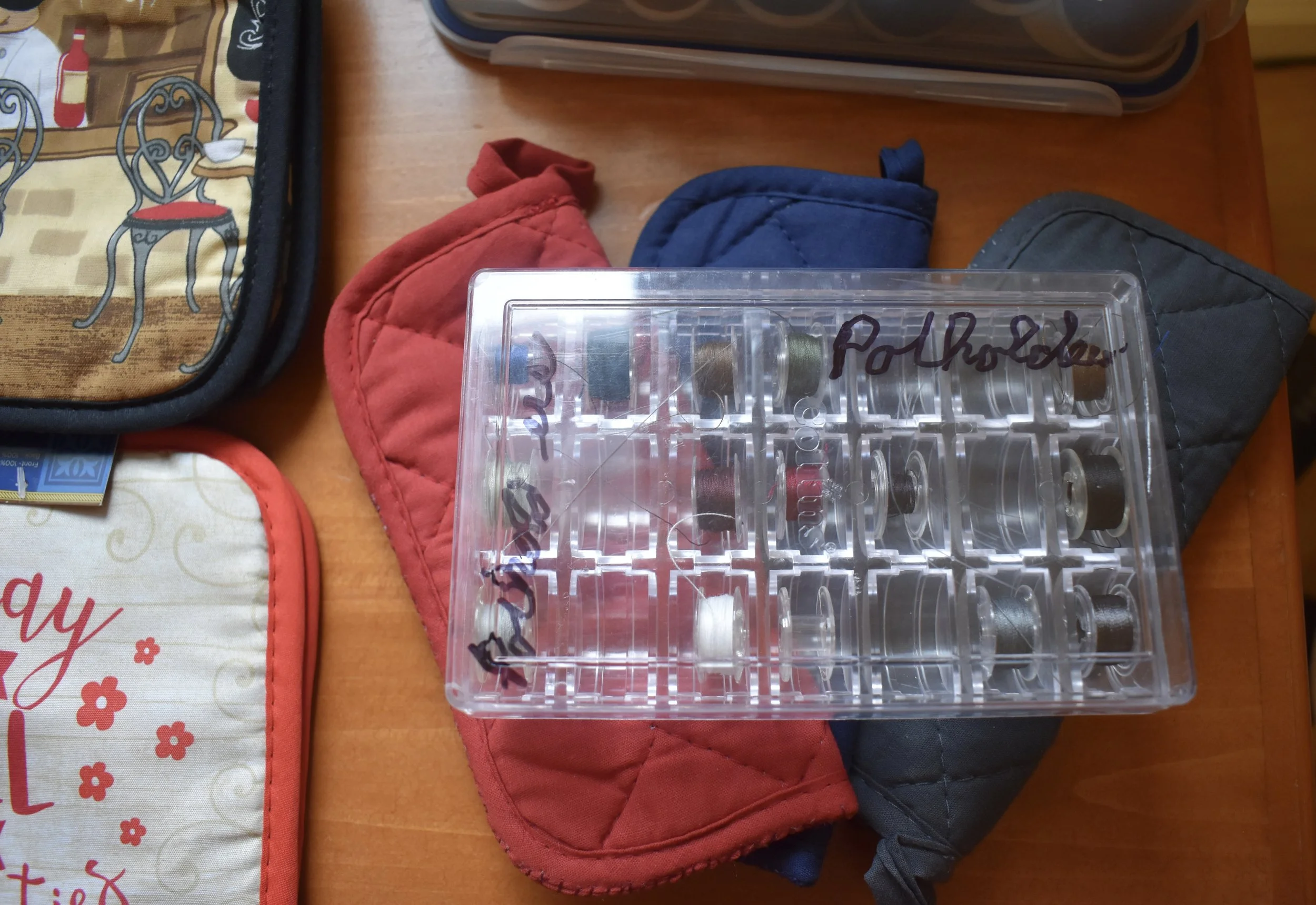
While living in Litchfield, she repaired buttonholes and collected a bunch of colored buttonhole thread on bobbins. The sewing machine she worked on eventually started to break down, and by the time she was leaving Litchfield, she was the only person using the machine.
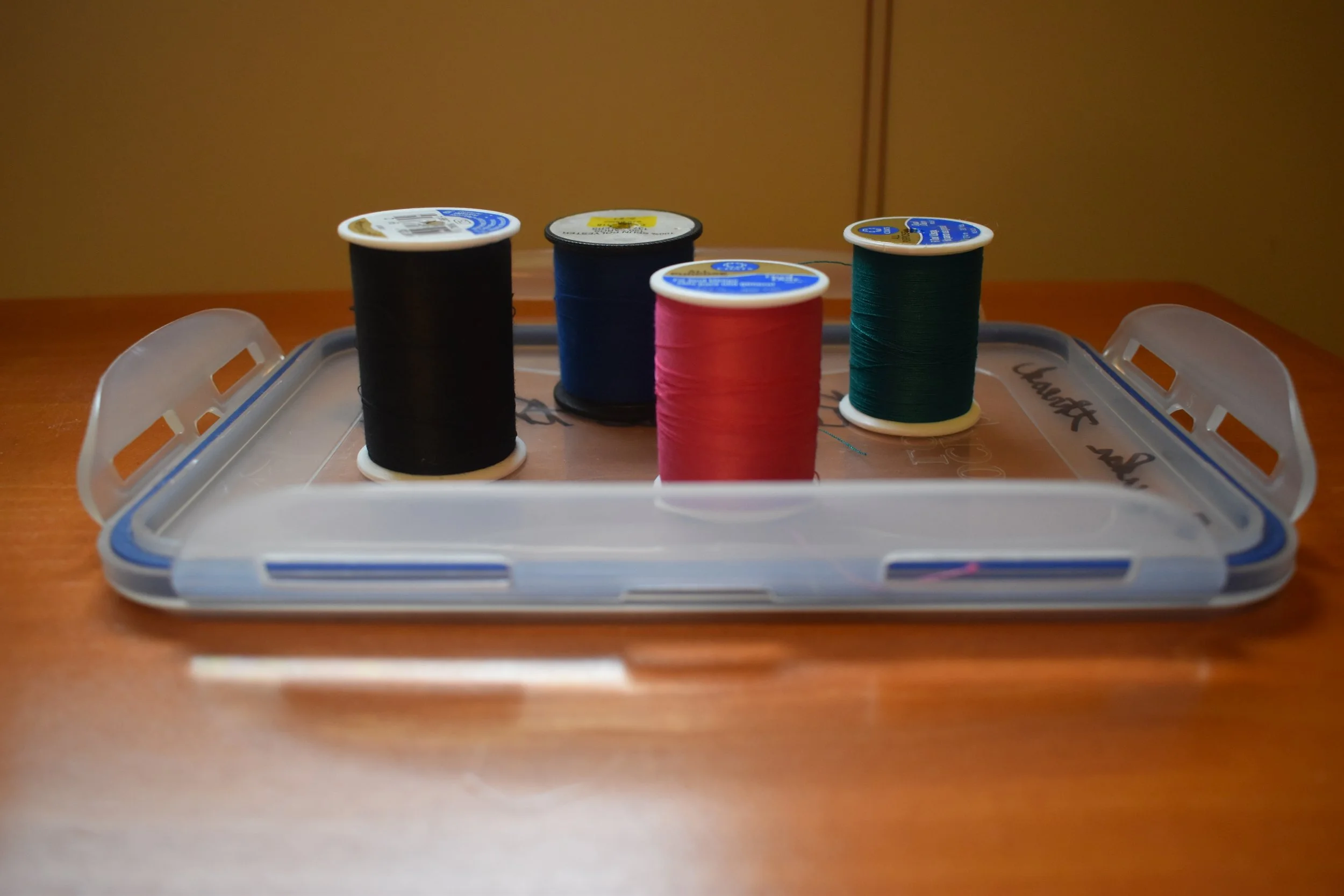
Since there was no use in getting it fixed and the sisters at Litchfield weren’t going to use it, she took it, along with spools of colorful thread, with her.
She planned to make the eyeglass cases for other sisters for the holidays.
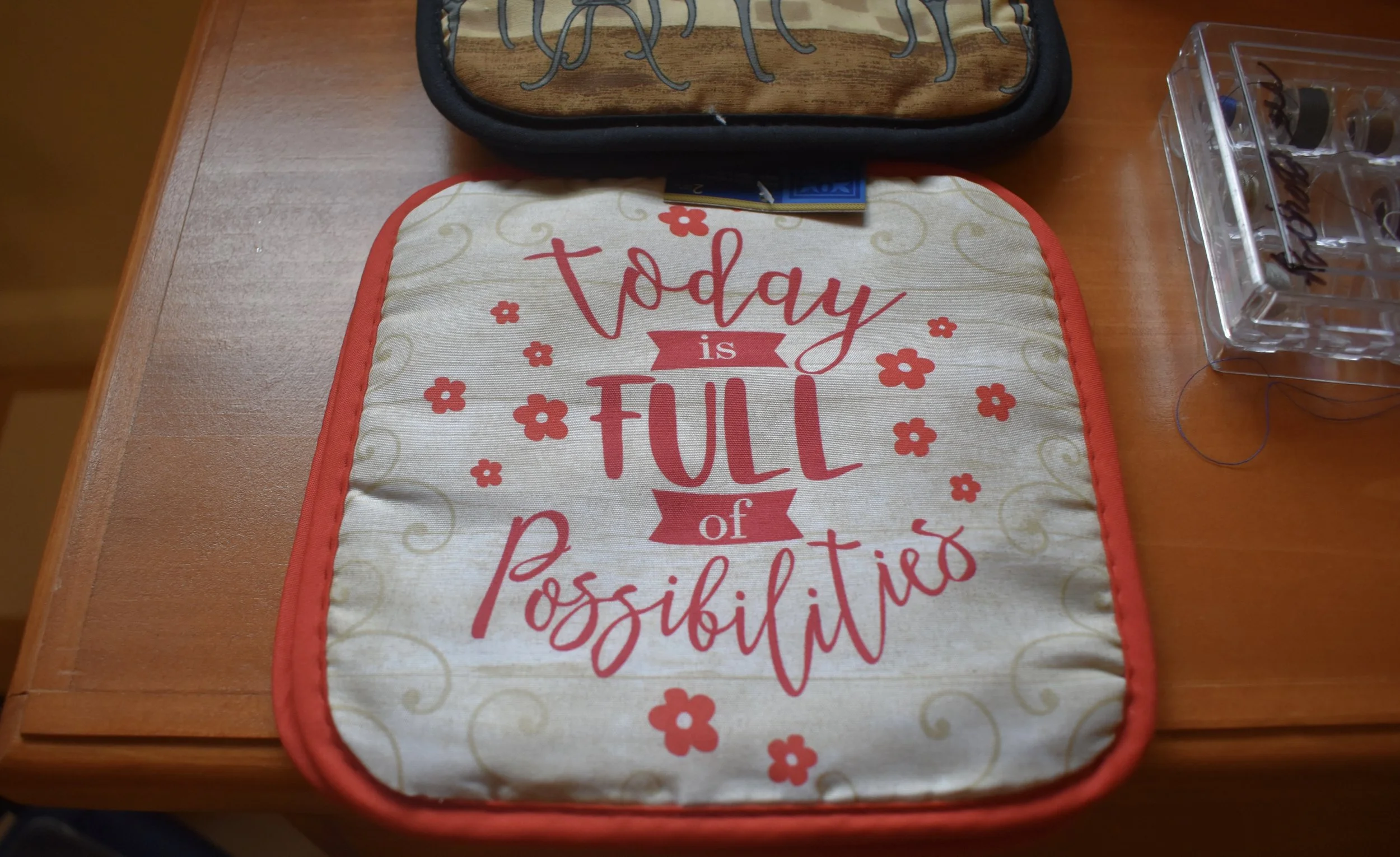
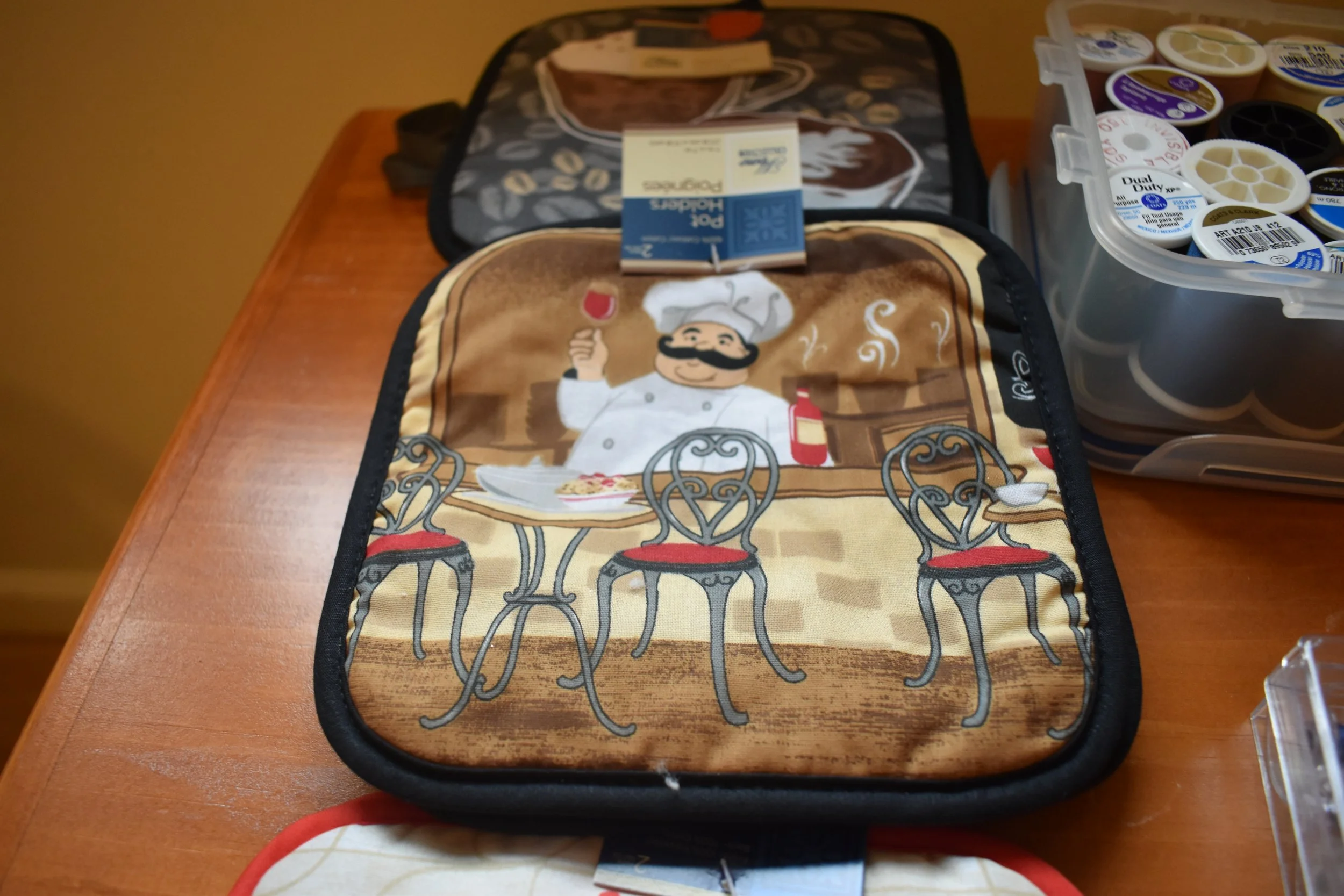
She buys the potholders from the dollar store, where she used to get three pot holders for a dollar, but now can only get two pot holders for a dollar fifty.
Sr. Rosemary also chooses both plain colors and patterns to work with. “I like the print ones. The prints have come out really nice,” she said. “In a purse, you can see them quickly.”
Sr. Rosemary talks about sewing sisters’ habits.
The eyeglass cases also hold up really well, and if the stitching comes out, anyone can sew them back together.
“Everybody has reading glasses. They don't have covers for the reading glasses. They don't get them with it. So that's why they come in handy.”
Sr. Rosemary unfortunately developed macular degeneration in her eyes, which meant she would eventually go blind. She was able to halt the blindness in one eye with treatment, but remains blind in the other.
“Because I'm getting the treatments, I can do a little bit of the hand sewing. So that's why I can do all of this here by hand,” she said of the eyeglass cases.
She chose a room at the Our Lady of Perpetual Help convent in Sound Beach, NY, that has good daylight, so she would be able to sew.
“The stitching is not perfect, but it'll do.”
While she stopped making eyeglass cases for a period of time, she began again to show them off for the Wisdom and the Arts project.
Her first ministry was as a sewing sister, which later became a hobby, and then something she took, and continues to take, with her throughout her life. It also wasn’t all she did as a Daughter of Wisdom; she was a teacher for many years and earned a Bachelor of Science and a Master of Science in Education from St. John’s University and Boston College, respectively.
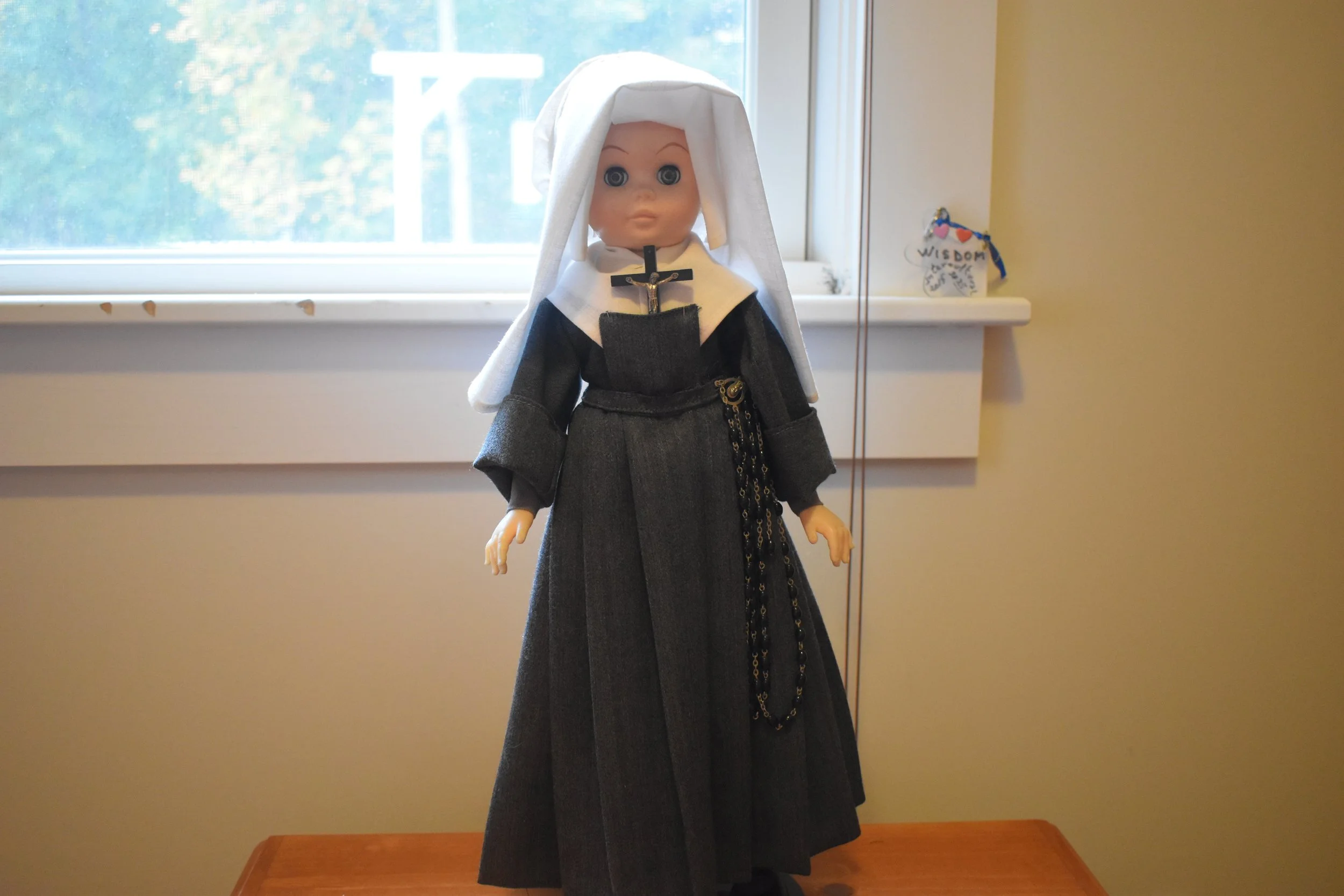
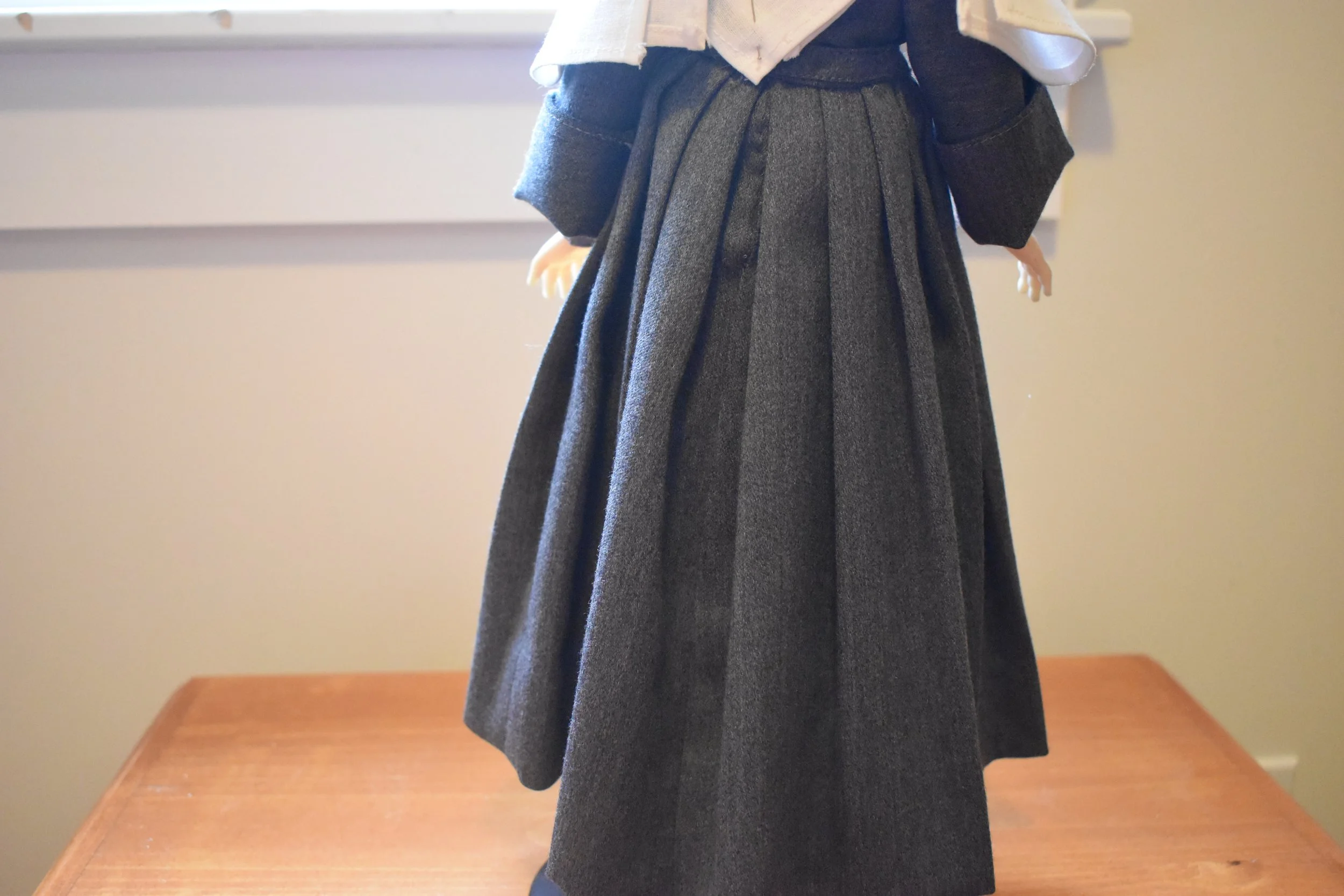
Sr. Rosemary also sewed the sisters’ habits. She learned from other Daughters of Wisdom, one being Sr. Ubald from Canada, who learned to sew from a fashion designer. Because of this, Sr. Rosemary learned all the tricks of the trade from a professional, including how to fit things on people.
The habits’ skirts had pleats that lay flat, meaning they didn’t fan open even when they fell down. Not a lot of sisters’ habits closed in that way, so whenever other sisters saw Sr. Rosemary or Sr. Ubald fitting a habit, they would ask them to do theirs.
“Our pleats,” said Sr. Rosemary, “they stayed closed.”
The habit also included a white kerchief with a coif to cover their heads. The coif was stiff like a board, so learning how to style it was important. Litchfield recently redid a mannequin wearing a habit, and a friend of Sr. Rosemary’s stated the only one who could redo the coif is Sr. Rosemary herself.
The sisters called folding the coif “breaking” it because of how stiff it was to work with.
“If you broke it the wrong way, you had to redo the whole thing over again. It's like a piece of plasterboard, that's how stiff it is. And you wore that for a whole week,” said Sr. Rosemary. The coif consisted of different pieces, including one that you wore like a cap and tied in the back. On top of that was a cornette, which was a slightly starched piece that was pinned tightly on your head. On top of that was another big, starched piece, and then it was all tied with a string.
“So you didn't go out in the rain in that for sure.”
Sr. Rosemary also sewed people’s clothes that needed fixing. Along with sewing buttons back in place, when the priests asked the sisters for help sewing something, one sister would always tell them to “ask Rosemary.”
There was one instance where a priest who was in Litchfield with Sr. Rosemary walked up to celebrate Mass, and his pants were a little short.
“I remember saying this to Sister Ann. I said, ‘I hope I didn't shorten those pants,’” said Sr. Rosemary.
“And she went hysterical laughing. And all during Mass, every once in a while, [she] would start laughing, looking at him and his pants shortened up above his ankles. She was thinking of me saying, ‘I hope I didn't shorten his pants.’ And I didn't.”
Sr. Rosemary also talked about Sr. Jeannine Boutin, who passed away in 2024. Sr. Jeannine was a sewer of clothing, too, and she worked mostly with the Montfort Fathers. She made a lot of their vestments for Mass.
“She was a wonderful person.”
January 2026
“She is a tree of life to those who take hold of her; those who hold her fast will be blessed.”
Proverbs 3:18
Take time for the tree
Take time for the tree is a collaborative work by Sisters Eileen Berton, Barbara O’Dea, and Rosemarie Greco, produced in a Haiku writing workshop in Litchfield, CT, in 1992. In this piece, Sr. Barbara O’Dea provides vocals to the music composed and played on piano by Sr. Rosemarie Greco, set to the Haiku by Sr. Eileen Berton. The artwork, "The Birth of Wisdom," by Danielle Mailer, was created in 2009 for the Wisdom House Retreat and Conference Center in Litchfield, CT, as a Christmas card.
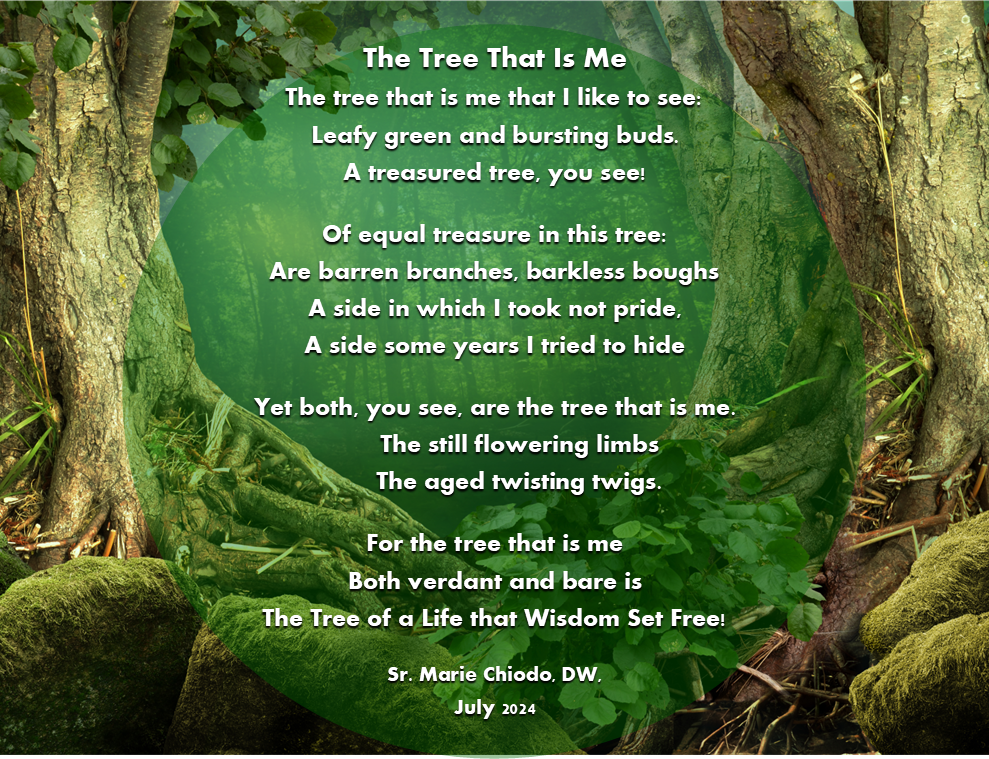
Poetry by Sr. Marie Chiodo, DW